 Neto Gregório
Israel-Iran War 2025: Everything You Need to Know About the Conflict
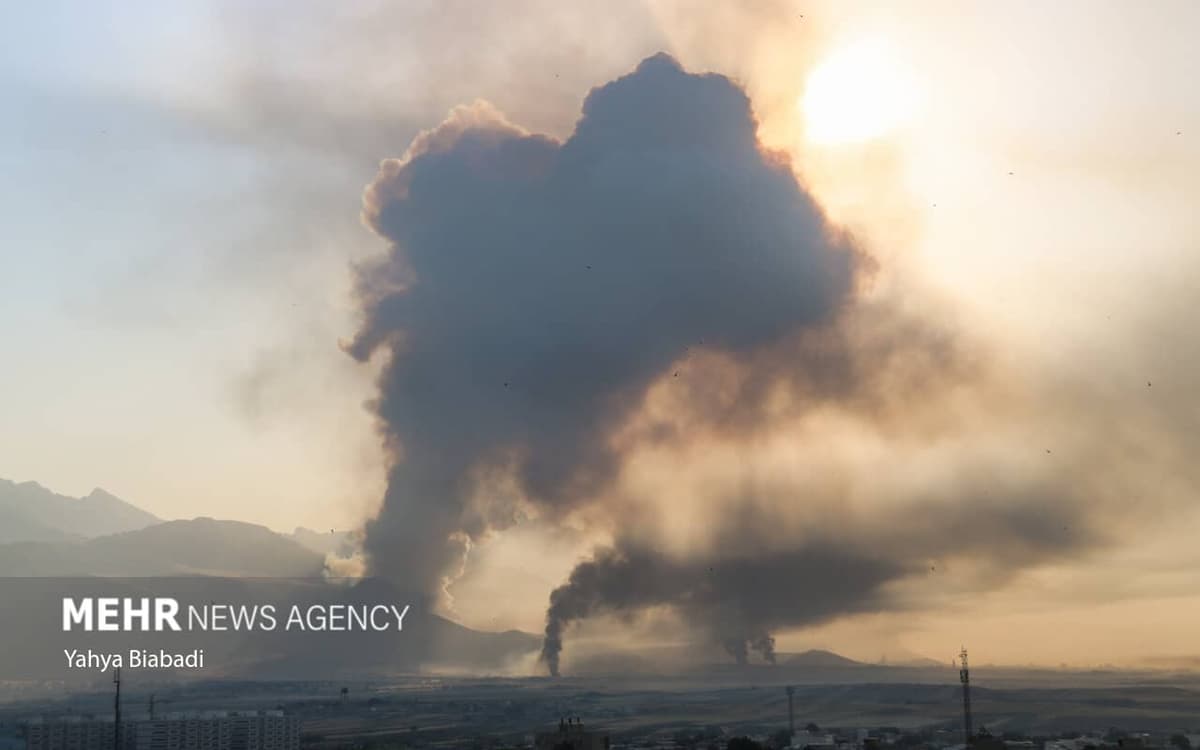
The military escalation between Israel and Iran in June 2025 represents one of the most critical flashpoints ever recorded between the two countries. Israel has for decades considered the Iranian nuclear program an existential threat, despite Tehran's repeated denials of any intention to develop nuclear weapons (1). The current scenario is the result of years of tension, indirect attacks, and hostilities through allied groups — but never before had both countries engaged in direct attacks of such magnitude.
Israel's distrust of Iran is based on the perception that Tehran is close to obtaining nuclear weapons, which would eliminate Israel's strategic advantage as the only country in the region with an undeclared nuclear arsenal (1). Benjamin Netanyahu's government had for years been warning about the need to stop the Iranian nuclear program's advance, arguing that the window of opportunity for action was closing.
Iran, for its part, insists its nuclear program is peaceful and intended for power generation, as provided for under the Nuclear Non-Proliferation Treaty (NPT), of which it is a signatory (1). However, the International Atomic Energy Agency (IAEA) recently pointed out that Iran has not fully complied with its inspection obligations — an accusation Tehran vehemently rejects.
The relationship between the two countries is further complicated by the fact that both have alliances and networks of influence throughout the region. Israel enjoys the unconditional support of the United States, which not only provides weapons and military technology but also shields Israel from international condemnations, particularly at the UN Security Council (1). Iran, in turn, maintains close ties with groups such as Hezbollah (Lebanon), Iraqi militias, and the Houthis (Yemen), as well as strategic relations with Syria and Russia.
The Start of the Attacks: Israel Strikes Strategic Targets in Iran
In early June 2025, Israel launched an unprecedented air campaign against Iran, targeting mainly nuclear facilities, missile production centers, and the country's military and scientific leadership (2)(3). The attack was announced by Prime Minister Benjamin Netanyahu, who declared that the operation would continue "for as many days as necessary to remove the Iranian threat" (2).
Israeli targets included:
- Natanz Enrichment Complex (Isfahan Province): Iran's main uranium enrichment center, considered crucial to the country's nuclear program (4)(2).
- Various neighborhoods and installations in Tehran: Nobonyad Street, Lavizan, Jahan Koudak Tower, Farahzad, Amir Abad, Andarzgou, and Langari Street, as well as the Asatid-e Sarv complex (2). These locations housed military facilities, nuclear research centers, and the residences of military leaders and scientists.
- The cities of Tabriz and Shiraz: Military and strategic targets on the outskirts of these cities were also struck, according to Iranian state media (4)(5).
In addition to striking facilities, Israel carried out targeted assassination operations against Iranian military leaders and nuclear scientists. Among the dead:
- Major General Mohammad Bagheri: Chief of Staff of the Iranian Armed Forces (2)(6).
- Major General Hossein Salami: Commander of the Islamic Revolutionary Guard Corps (IRGC) (2)(6).
- General Gholam Ali Rashid: Commander of the Khatam ol Anbia Central Headquarters (2)(6).
- Fereydoon Abbasi: Former head of the Atomic Energy Organization of Iran and renowned nuclear scientist (3)(2).
- Mohammad Mehdi Tehranchi: Physicist and president of the Islamic Azad University (3)(2).
Images shared on social media showed destroyed buildings in Tehran, suggesting Israel carried out precise and lethal strikes against specific targets (2). The supreme leader's advisor, Ali Shamkhani, was also hit and found in critical condition (2).
Iran's Reaction: Retaliation and Leadership Statements
Iran's response was swift and forceful. Supreme Leader Ali Khamenei warned that Israel would face a "bitter and painful" fate and promised that the "formidable force of the Islamic Republic's Armed Forces would ensure Israel did not escape punishment" (3). Khamenei accused Israel of "unleashing its dirty, bloodstained hand to commit a crime against Iran," claiming that attacks on civilian areas exposed the "malevolent" character of the Israeli regime (3).
On the same day as the Israeli strikes, Iran launched dozens of ballistic missiles at Israel, followed by a second wave of rockets and drones (7)(5). According to Israeli military sources, fewer than 100 rockets were fired in two waves, most of which were intercepted or fell far from their targets, causing limited damage — mainly from interception fragments (7)(5). The IDF spokesperson informed the public that they could leave shelters but should remain close to them across all regions of the country (7).
Iran's armed forces spokesperson, Abolfazl Shekarchi, stated that Israel would pay a "heavy price" for its actions (3). Iran also sent a wave of drones against Israel that flew over Jordanian and Iraqi airspace before being intercepted outside Israeli territory (6).
U.S. Involvement and Other International Actors
The United States played a significant role in the conflict, despite denying direct participation in Israeli operations. President Donald Trump spoke with Benjamin Netanyahu and reaffirmed U.S. support for Israel, stating the Israeli attack was "very successful" and that they would help defend Israel if Iran retaliated (4)(7). Trump also suggested that Israel's actions could pressure Iran to return to the negotiating table (4).
American government sources told the press that the U.S. did not participate in the planning or execution of Israeli strikes but assisted in intercepting Iranian missiles and drones directed at Israel (4)(7). Two destroyers, including the USS Thomas Hudner, were repositioned to the Eastern Mediterranean as a precaution (7). Currently, nine U.S. Navy ships are patrolling the Middle East (7).
The Trump administration had imposed a 60-day ultimatum for nuclear deal negotiations with Iran, which expired on the eve of the strikes (4)(5). Israel's ambassador to Washington stated that Israel is committed to preventing an Iranian nuclear weapons program (4).
Other countries, such as Canada and the United Kingdom, called for de-escalation. British Prime Minister Keir Starmer urged all parties to "urgently reduce tensions," warning that escalation serves no one (6). Canada recommended caution to its citizens in the Middle East (6).
Military and Civilian Impact
The Israeli strikes caused considerable devastation in Iranian civilian and military areas. Images of destroyed buildings in Tehran circulated on social media (3)(2). There are reports of civilian casualties, though official figures have not been released.
Iran's retaliation was largely neutralized by Israeli defense systems, but some explosions were recorded on Israeli territory (7)(5). Nevertheless, the scale of the attacks heightened fears of a regional war.
Strategic Analysis: Objectives and Limits of the Conflict
Israel says its action is aimed at dismantling Iran's nuclear program (1)(8). Iran maintains that Israel violated its sovereignty and committed aggression against civilians (3). Analysts highlight three key variables (8):
- Limits of Israeli objectives — the breadth of the strikes suggests an intent to weaken Iran's military and scientific leadership (8).
- Iran's capacity to retaliate — missiles and drones had limited impact, but Iran can mobilize regional allies (7)(5)(8).
- Risk of regional escalation — involvement of the U.S. and other powers raises the danger to strategic commercial routes (8).
Future Perspectives and Developments
Israel signals that operations could continue for days or weeks (2)(8). Analysts such as Karim Sadjadpour note that the full impact may take years to assess (8). Two opposing readings of Iranian strength persist (8):
- Iran as a "paper tiger" — it may have overestimated its capacity to respond.
- Iran holding back — it could mobilize Houthis and Hezbollah at a time of its choosing.
The most likely scenario is the continuation of limited hostilities with a permanent risk of escalation (8).
International Reactions and Humanitarian Concerns
Canada and the UK are calling for immediate de-escalation (6). The civilian situation is critical in both countries; sirens and shelters mark daily life in Israel, while neighborhoods in Tehran display destruction (3)(2). Disruptions in the Strait of Hormuz are already putting upward pressure on global oil prices (8).
Final Thoughts
The June 2025 war is an inflection point: Israel demonstrated the capacity to strike at the heart of Iran, while Tehran — even if constrained — showed it can fire missiles over Tel Aviv. The outcome remains uncertain; the international community is calling for restraint, but the risk of a regional conflagration remains high (6)(8).