 Neto Gregório
Loki [Season Two] – The Sacrifice Was Not Made, the Redemption Remained Incomplete
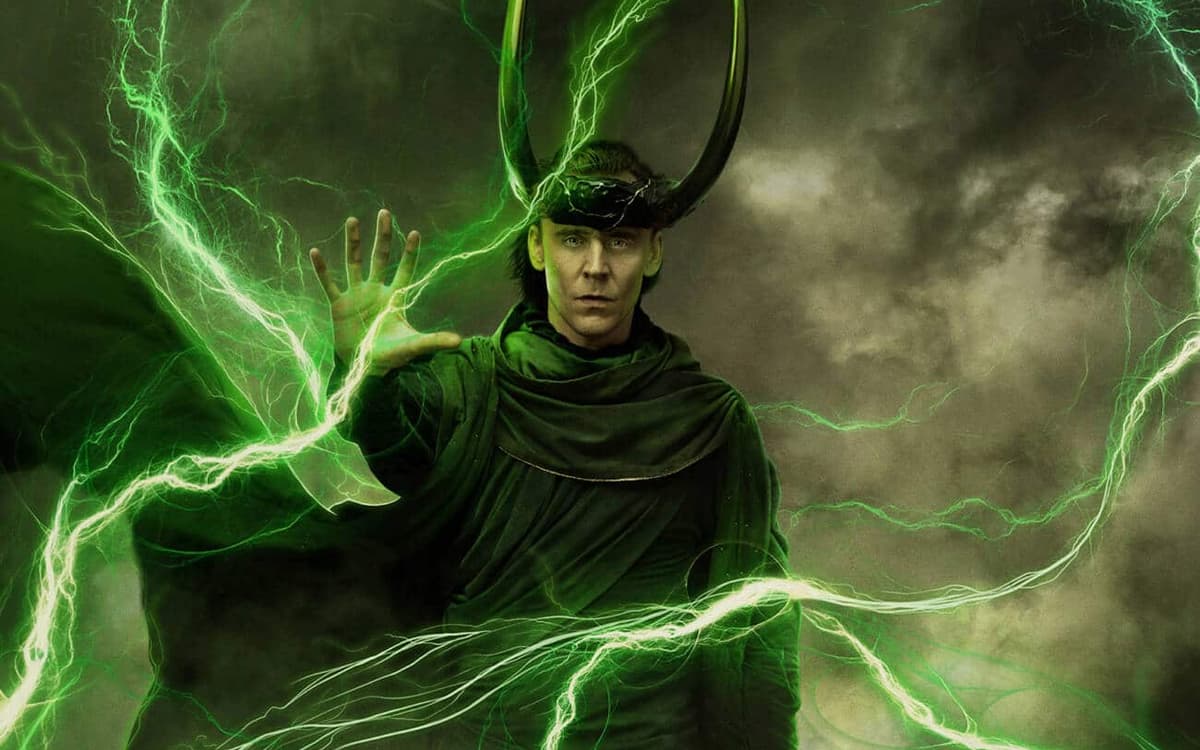
Redemption is the theme that most deeply touches the human soul, because it is precisely our greatest need. To be redeemed.
The devil, for his part, hates redemption. He will never have his own. That is why the story he tells humanity offers no second chances. He is a determinist. You're going to be damned — literally.
Everything he touches, he destroys. Every piece of music, cinema, and any other artistic expression he perverts. His essence is pure evil, and he wants to make man his vassal.
Every good story you encounter expressed through the human soul will be a story of redemption.
In the series Loki — the God of Mischief in Norse mythology — there is something warring in the protagonist's heart.
He longs for redemption while deep down seeking to become the most powerful god, the controller of time.
Through episode four, what I saw was one of Marvel's finest productions — one that would clearly reveal the purpose behind the entire MCU (Marvel Cinematic Universe).
For redemption, there is only one destination: sacrifice. Loki would have had to give his life at the end of this season to save the timelines, just as Iron Man sacrificed himself to save half the universe.
"For whoever wishes to save his life will lose it; but whoever loses his life for my sake will find it," said the greatest redeemer in the universe.
Redemption lies in sacrifice.
On the other hand, the writers may have wanted to salvage their own poor storytelling choices — and so Loki ends up being sacrificed not for redemption, but for revenge.
His fate as a trickster comes to the surface, and the studio does not choose the path of truth, but the path of deception.
He becomes not merely the trickster god, but the god of this age — growing ever more like the devil, who is the father of lies and the god of this present age.
Part 2 \[spoilers\]
*"For whoever wishes to save his life will lose it; but whoever loses his life for my sake will find it." – Matthew 16:25*
He did not die. He ended up alone, but he did not die. They transformed tedium into a sacrifice. They did not complete his redemption. He did not need to offer his life, as Tony Stark did.
*"Even Satan disguises himself as an angel of light." – 2 Corinthians 11:14*
Loki, the god of lies, became the god of time, with the timelines in his hands, seated on a throne from which he sustains the "free will" of people and the possibility of multiversal expansion.
This is the highest redemption that man can reach through his own strength. He sacrifices some of his desires, but he will never sacrifice his self.
*"What is born of the flesh is flesh, and what is born of the Spirit is spirit." – John 3:6*
Flesh produced flesh. Greek thought prevailed. Stoicism — the philosophical school that preaches virtue as a target and acceptance of what cannot be changed as our destiny — was the foundation of this story. It appears to redeem, but in the end, it only enslaves.
Loki is the ultimate divine representation of our fallen world, which seeks through works to attain what God freely gives and which can only be received by faith.
Thor's brother became the god of the Pharisees. In the end, enthroned, he became the life source of Yggdrasil — the colossal tree of Norse mythology representing the axis of the cosmos, a counterfeit of the Tree of Life that God planted in Eden.
Despite being an excellent series — superbly acted and scripted — Loki clearly illustrates the greatest challenge facing the Church today, a challenge already faced by the apostles and vigorously combated by Paul.
*"For though we live in the world, we do not wage war as the world does. The weapons we fight with are not the weapons of the world. On the contrary, they have divine power to demolish strongholds. We demolish arguments and every pretension that sets itself up against the knowledge of God, and we take captive every thought to make it obedient to Christ." – 2 Corinthians 10:3-5*