 Neto Gregório
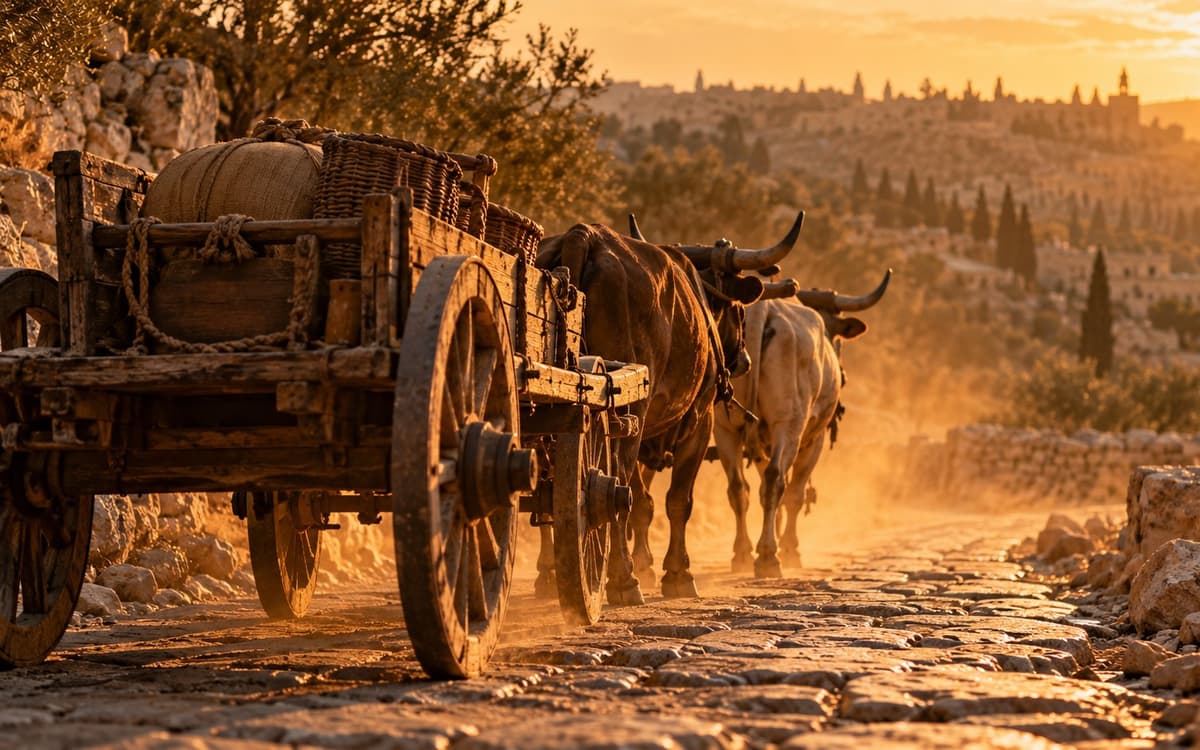
How much of your gospel do you carry on your own shoulders? And how much have you loaded onto a cart?
There is a story in the Old Testament that feels strange the first time you read it. A man tries to keep the Ark from falling and dies for it. It seems unfair. But once you understand what went wrong before that moment, the story stops being strange and becomes a mirror.
A new cart for an old weight
David wanted to bring the presence of God back to Jerusalem. His intention was good. The Ark had been forgotten for decades in the house of Abinadab, and David went to get it.
To do it, they built a new ox cart (2 Samuel 6:3). Uzzah and Ahio were guiding the cart, and halfway there the oxen stumbled. The Ark shook, Uzzah reached out to steady it, and God struck him down right there (2 Samuel 6:6-7).
The problem did not start with Uzzah's hand. It started with the cart.
The Ark of the Covenant was supposed to be carried on the shoulders of the Levites, not on an ox cart, even a new one.
God had been clear. When Moses handed out wagons to the Levites, the Kohathites received none, because their job was to carry the sacred objects on their shoulders (Numbers 7:9). There was no shortcut. The weight was meant to be felt.
Ignorance did not save Uzzah
Not knowing this command did not keep Uzzah from dying when he put his hand on the Ark to keep it from falling.
Uzzah was not just some curious bystander. He was Abinadab's son, and the Ark had spent years inside his father's house (2 Samuel 6:3). Given his position, he had an obligation to know. The prophet Hosea says God's people are destroyed for lack of knowledge (Hosea 4:6). It is not a lack of goodwill; it is a lack of the Word.
And notice what David does next. Three months later, he goes back to the text. He admits the first attempt failed because they did not seek the Lord the way he had commanded, and this time the Levites carry the Ark on their shoulders, with the poles, just as Moses had ordered (1 Chronicles 15:13-15). The presence arrived in Jerusalem when the weight went back on the right shoulders.
The carts we build
We have a habit of building carts to do and live what the Bible tells us to.
Attempts to outsource the weight and the responsibility that rest on our shoulders to live the gospel.
From "pray for me, brother" to the idea that only people who want to be pastors need to study the Bible.
Asking for prayer is not wrong. Praying for one another is biblical. The cart shows up when the prayer request replaces your own prayer. When you live on borrowed intercession and never bend your knees.
The same goes for the Bible. The Bereans were not pastors, and still they searched the Scriptures day after day to see if what they were hearing was true (Acts 17:11). The Word was not handed to a special class of believers. It was handed to you.
We give to social causes because we can't deal with the poor, so we let others deal with them through our money, but without our involvement.
Giving is good. What concerns me is the motive. John writes that love must be shown through actions and in truth, not just in words (1 John 3:18). Money can be action. But when it serves to keep the poor at arm's length, it has turned into an ox cart.
Beautiful does not mean right
We build new, beautiful, relevant, modern carts to run at all costs from what the gospel asks of us.
David's cart was new. The Bible makes a point of saying so. And it was still wrong. Not everything new, beautiful and efficient pleases God. The right question was never "does it work?" The right question is "is this how he commanded it?"
An ox cart is comfortable. Nobody sweats, nobody feels the weight, the trip goes faster. Shoulders get tired. Shoulders hurt. But the presence travels on shoulders.
And make no mistake: carrying is not proving your worth to God. The Ark was his, the presence was his, the blessing on the house of Obed-edom was his. Your shoulder only shows that you stopped running from the place where he wants to meet you.
Put the weight back on your shoulder
So take an honest inventory. Where have you put the gospel on a cart?
Maybe it is the prayer you always ask for and never pray. Maybe it is the Bible you leave to those who "have a calling." Maybe it is the poor you only know through a bank transfer receipt.
Pick one of these areas this week and take it off the cart. Pray yourself. Open the Bible yourself. Go to someone in need, with your presence and not just your money.
What new cart have you built so you don't have to carry the Ark on your own shoulders?