 Neto Gregório
The Samaritan
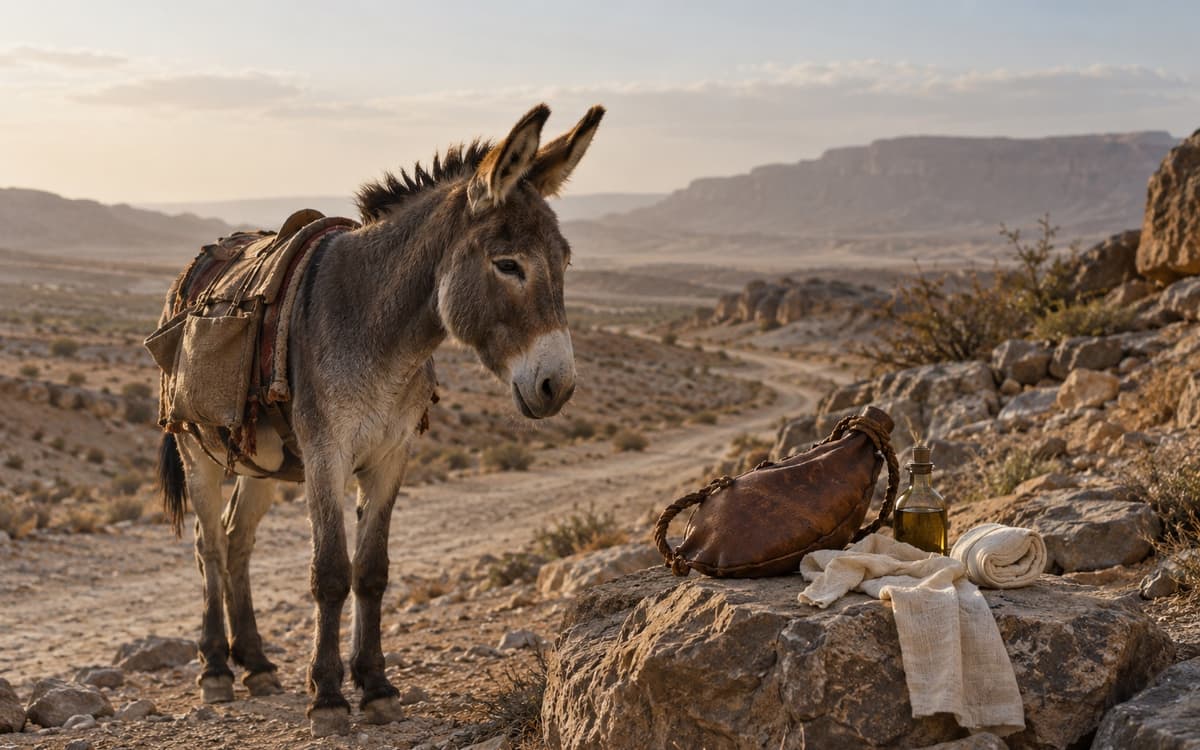
Then a despised Samaritan came along, and when he saw the man, he felt compassion for him. Luke 10:33
Introduction:
- The role of a Christian: to be an ambassador of the Kingdom, to love your neighbor and to worship.
- "we are Christ's ambassadors" (2 Cor 5:20). An ambassador speaks on behalf of someone else and represents another kingdom.
- The story of the Samaritan begins with a test question and ends with a command.
1. The question. The expert in the law wanted to test Jesus (Luke 10:25).
- "Teacher, what should I do to inherit eternal life?" (Luke 10:25).
- Jesus turns the question back: "What does the law of Moses say? How do you read it?" (Luke 10:26).
- Whoever tries to test Jesus ends up tested by Him.
2. The right answer. Love God and love your neighbor (Luke 10:27).
- "'You must love the Lord your God with all your heart (...).' And, 'Love your neighbor as yourself'" (Luke 10:27).
- "Right! (...) Do this and you will live!" (Luke 10:28).
- Knowing the right answer is not living the right answer.
3. Grace and works. What could we do to inherit eternal life? (Eph 2:8-9).
- An inheritance is not earned; it is received. Nobody works to become an heir.
- "God saved you by his grace when you believed. And you can't take credit for this; it is a gift from God" (Eph 2:8).
- You don't do good to be saved. You do good because you were saved.
4. The priest, the Levite and the Samaritan. The ones who had the duty kept their distance; the one who was the problem stopped (Luke 10:31-33).
- The priest "crossed to the other side of the road and passed him by" (Luke 10:31). The Levite "also passed by on the other side" (Luke 10:32).
- The Samaritan was the problematic part of the story: Jews and Samaritans did not get along. He was the one who "felt compassion" (Luke 10:33).
- Religion without compassion crosses the street.
5. The cost of doing good. Loving your neighbor is expensive (Luke 10:34-35).
- Oil and wine: he "soothed his wounds" with what he had (Luke 10:34).
- Walking: he "put the man on his own donkey" (Luke 10:34). Whoever carries someone else on the donkey walks.
- Two denarii and the future expense: "If his bill runs higher than this, I'll pay you the next time I'm here" (Luke 10:35).
Conclusion:
Yes, now go and do the same. Luke 10:37
- The expert asked who his neighbor was. Jesus asked who had been a neighbor (Luke 10:29, 36).
- You don't need to find out who your neighbor is. You need to be someone's neighbor.
- You must be the Samaritan. Go and do the same!
- Who is lying by the side of your road today?